


Did you know that the demand for rigid-flex prototype PCBs is growing fast? This is because they are both versatile and durable in complex projects.
These boards mix the reliability of rigid PCBs with the flexibility of flexible PCBs. They let you create complex designs that fit in tight spaces. They also handle bending and flexing well.
When you dive into prototype printed circuit boards, knowing the design and manufacturing details is key. The right techniques can greatly improve your flexible rigid PCB projects’ performance and reliability.
Understanding Rigid Flex PCB Technology
Learning about rigid flex PCB technology can unlock your electronic designs’ full power. These boards mix the toughness of rigid boards with the flexibility of flexible ones. They’re perfect for places where both strength and bendability are needed.
What is Rigid Flex PCB?
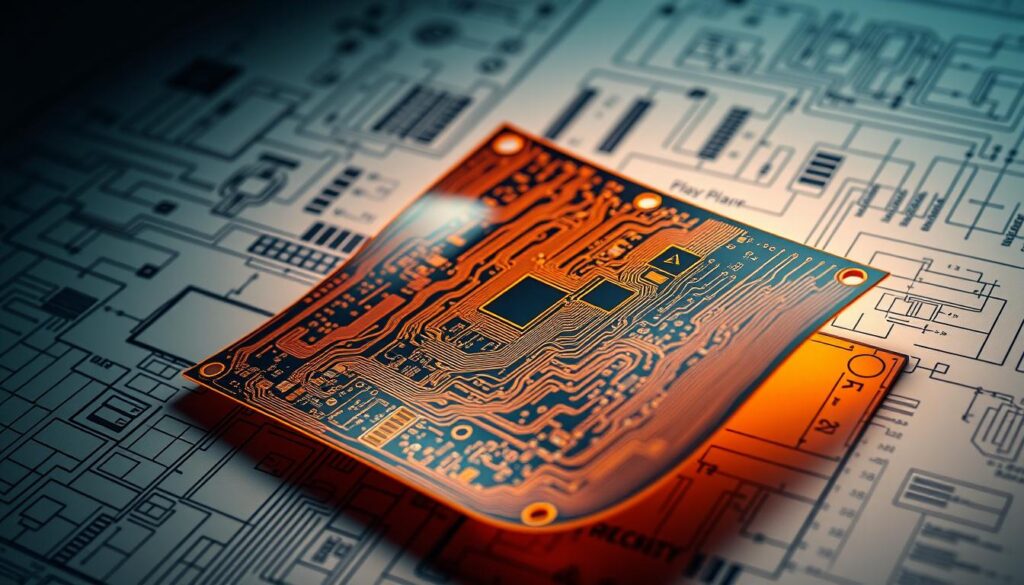
A rigid flex PCB is a special board that combines rigid and flexible parts. It lets you make complex, small electronic setups. These setups can bend and flex without losing their shape or function.
The rigid parts keep the board stable. The flexible parts let it bend to fit different needs.
Key Benefits of Rigid Flex PCBs
Rigid flex PCBs have many advantages:
- Improved Durability: They have fewer connections, which means fewer places for things to go wrong. This makes them more reliable.
- Reduced Assembly Costs: Putting rigid and flexible parts together in one board makes it easier to assemble. This saves money.
- Enhanced Signal Integrity: These boards can be made to send signals better. This reduces interference and boosts performance.
Using these benefits, you can make electronic products that are better, cheaper, and more reliable. They meet the needs of today’s complex uses.
Applications of Rigid Flex PCBs
Rigid-flex PCBs are used in many fields, from gadgets to space tech. They are great because they are both flexible and reliable. This makes them perfect for lots of uses.
Consumer Electronics
In gadgets, rigid-flex PCBs are key when space is tight and things need to work well. They’re in phones, laptops, and smartwatches. These PCBs help make devices smaller and better at what they do.
Medical Devices
Medical gear needs parts that can handle tough conditions. Rigid-flex PCBs fit the bill for implants, tests, and watches. They can handle cleaning and fit in small spots, which is super useful.
Aerospace and Automotive
In space and car tech, rigid-flex PCBs are vital for their strength and skill. They’re in plane guides, car controls, and other key parts. Their toughness in harsh places is why they’re so important here.
| Industry | Applications | Benefits |
|---|---|---|
| Consumer Electronics | Smartphones, Laptops, Wearable Devices | Compact Design, Improved Performance |
| Medical Devices | Medical Implants, Diagnostic Equipment, Monitoring Devices | Reliability, Withstands Sterilization |
| Aerospace and Automotive | Aircraft Navigation, Automotive Control Systems | Durability, Performance Under Extreme Conditions |
Knowing how rigid-flex PCBs are used helps us see their big role. They make gadgets better and medical gear reliable. They’re really important.
Design Considerations for Rigid Flex PCBs
To get the best results with rigid flex prototype PCBs, focus on key design elements. Your choices will greatly affect how well the PCB works, lasts, and can be made.
Layer Stack-Up Strategies
The layer stack-up is very important in rigid-flex PCB design. You must plan the rigid and flexible layers carefully. This ensures the PCB works well, delivers power, and is stable.
- Determine the number of layers needed for your design.
- Choose the right materials for each layer.
- Make sure the stack-up doesn’t warp or stress too much.
Material Selection
Choosing the right materials is key in designing rigid-flex PCBs. You need materials that fit your electrical, thermal, and mechanical needs. Polyimide is often used for flexible parts, and FR4 for rigid ones.
| Material | Properties | Typical Use |
|---|---|---|
| Polyimide | Flexible, high-temperature resistance | Flexible layers |
| FR4 | Rigid, cost-effective | Rigid sections |
| Adhesiveless Materials | High reliability, flexible | High-performance flexible layers |
Environmental Factors
Things like temperature, humidity, and chemicals can affect your rigid-flex PCBs. You should design your PCB to handle these conditions well.
Key Considerations:
- Operating temperature range.
- Moisture resistance.
- Chemical exposure.
By thinking about layer stack-up, material choice, and environmental factors, you can make a quick turn rigid flex PCB that works well and lasts long.
Prototyping Process for Rigid Flex PCBs
To make a reliable rigid-flex PCB, you must follow a detailed prototyping process. This ensures your product meets all specs and works as expected.
Initial Design and Planning
The first step is to design and plan your rigid-flex PCB. You need to know what the PCB will do, what materials to use, and any manufacturing limits. Good planning at this stage helps avoid expensive changes later.
Key considerations during initial design and planning include:
- Defining the PCB’s purpose and functionality
- Selecting appropriate materials for the rigid and flexible sections
- Determining the layer stack-up and configuration
- Establishing manufacturing and assembly constraints
CAD Software Tools
CAD software is vital for designing and prototyping rigid-flex PCBs. It lets you make detailed designs, test performance, and spot problems before production.
Popular CAD software tools for rigid-flex PCB design include:
| Software | Key Features |
|---|---|
| Altium Designer | Advanced 3D modeling, layer stack-up management |
| Autodesk Eagle | User-friendly interface, extensive library of components |
| Cadence Allegro | High-speed design capabilities, robust simulation tools |
Rapid Prototyping Techniques
Rapid prototyping lets you quickly test and check your rigid-flex PCB design. It involves making a working prototype to verify performance and find any design issues.
Common rapid prototyping techniques for rigid-flex PCBs include:
- 3D printing for creating complex geometries
- Laser cutting for precise material processing
- CNC machining for accurate milling and drilling
Using these techniques speeds up development. It ensures your rigid-flex PCB meets all necessary specs.
Manufacturing Rigid Flex PCBs
To make rigid flex PCBs, you must think about several important things. The process uses advanced tech and careful steps. This ensures the final product is top-notch and reliable.
Selecting the Right Manufacturer
Finding the right maker is key for making rigid flex PCBs. Look for someone with a lot of rigid flex PCB assembly experience. They should have a good track record of quality products.
Check their tech and design skills. See if they can meet your needs.
- Check their experience with similar projects.
- Look at their quality control steps.
- See how fast they can make things and their lead times.
Production Techniques
The ways to make prototype PCB manufacturing matter a lot. Techniques like laser drilling and making flexible circuits are used. It’s important to know about these methods and how they fit your project.
Some main techniques are:
- Stacking and laminating layers.
- Drilling and plating.
- Finishing the surface.
Quality Assurance Measures
Having strong quality assurance measures is key for reliable rigid flex PCBs. This means checking and testing well. Work with your maker to set up these steps.
Important quality checks are:
- Looking at the PCB visually.
- Testing the electrical parts.
- Testing in different environments.
By focusing on these, you can make sure your rigid flex PCBs are made to the best standards. They will meet your exact needs.
Testing Rigid Flex PCB Prototypes
The testing phase is key to checking if your rigid-flex PCBs work as planned. You must make sure they meet all the specs and work well in different situations.
Types of Testing Methods
There are many ways to test rigid-flex PCB prototypes. These include:
- Visual inspection to spot any defects or oddities.
- Electrical testing to check if the PCB works right.
- Environmental testing to see how it handles extreme temperatures and humidity.
- Mechanical testing to check its durability and flexibility.

Importance of Reliability Testing
Reliability testing is vital to make sure your rigid-flex PCB can handle its job. This test puts the PCB through stress like temperature changes, vibrations, and humidity to find weak spots.
Through thorough reliability testing, you can:
- Find and fix design or manufacturing issues early.
- Make sure your PCB meets industry standards and rules.
- Improve the quality and reliability of your rigid-flex PCB prototype.
For quick turn rigid flex PCB and flexible rigid PCB fabrication, picking a reliable manufacturer is key. They should follow strict testing rules to ensure top-notch prototypes.
Cost Factors in Rigid Flex PCB Prototypes
When designing rigid-flex circuit boards, it’s key to know the cost factors. This helps in making your prototype PCB manufacturing process better. The cost of rigid-flex PCB prototypes varies based on material, labor, and production costs. It’s also about finding a balance between quality and budget.
Material Costs
Material costs play a big role in the overall cost of rigid-flex PCB prototypes. The type and quality of materials used can change the final cost. For example, choosing between standard FR4 and high-frequency materials can impact the cost.
High-frequency materials, though pricier, perform better for high-speed applications. It’s important to pick the right materials based on your project’s needs.
Labor and Production Costs
Labor and production costs are also key in figuring out the cost of rigid-flex PCB prototypes. The design’s complexity, the number of layers, and how many you need can affect labor costs. Using efficient production methods and working with experienced manufacturers can lower these costs.
You should collaborate with your manufacturer to make your design easier to produce.
Balancing Quality and Budget
It’s vital to balance quality and budget when making rigid-flex PCB prototypes. Cutting costs too much can lead to reliability problems and higher costs later. Focus on quality but also look for ways to save, like simplifying designs or choosing materials wisely.
By understanding these costs and working with a trusted manufacturer, you can get a high-quality rigid-flex PCB prototype that fits your budget.
Common Challenges in Rigid Flex PCB Development
Developing rigid-flex PCBs can be tricky. You might face several hurdles that affect your design and making process. Knowing these challenges helps find solutions and improve your design.
Design Complexity
Designing rigid-flex PCBs is complex. Mixing rigid and flexible parts needs careful planning. You must think about layer stack-up, material choice, and how the environment might impact your PCB.
Layer stack-up is key for signal integrity and stability. Also, the material properties of both parts must match for reliability.
Assembly Difficulties
Assembling rigid-flex PCBs can be hard. Their unique shape makes it different from regular PCBs. You must make sure your design fits the assembly process, considering where components go and how to solder them.
To solve these issues, use specialized assembly techniques and advanced manufacturing technologies. Working closely with your manufacturer is also vital to optimize your design for assembly.
Understanding the challenges of rigid-flex PCB development helps you tackle them. This includes careful planning, teamwork with your manufacturer, and knowing what rigid-flex PCBs need.
Future Trends in Rigid Flex PCB Technology
Looking into the future of rigid-flex PCB technology, you’ll find big changes. These changes are driven by the need for more complex, smaller, and reliable electronics.
Advancements in Materials
New materials are being created to make rigid-flex PCBs better. Expect to see:
- Flexural endurance: Materials that can handle more bends without losing circuit integrity.
- Thermal stability: Materials that keep their properties in extreme temperatures.
- Dielectric properties: Materials that improve signal transmission and reduce loss.
These improvements will lead to quick turn rigid flex PCBs that meet today’s electronics standards.
Innovations in Design Software
Design software for rigid-flex PCBs is also getting a big boost. You can look forward to:
- Enhanced simulation tools: Better modeling of mechanical and electrical behavior.
- Improved design for manufacturability (DFM): Software that checks designs for production readiness.
- Integration with other design tools: Easier integration with CAD software for a smoother design process.
These design software innovations will help you create complex prototype printed circuit boards more efficiently.
The future of rigid-flex PCB technology is full of promise. Advances in materials and design software are leading to more advanced and reliable rigid flex circuit boards. By keeping up with these trends, you can improve your design and manufacturing processes and stay competitive in the industry.
Tips for Successful Collaboration with PCB Manufacturers
Working with PCB manufacturers needs a smart plan to get the best results for your flexible circuit boards. To make your project go smoothly, you must work well with your manufacturer. Give them clear instructions and be realistic about what you expect.
Clear Communication
Good communication is key to a successful partnership with your PCB manufacturer. Make sure to tell them exactly what you need, want, and expect. This means giving them all the design details, choosing the right materials, and saying what tests you need for your rigid flex PCB assembly.
To make communication clear, try these steps:
- Give them all the design files, like Gerber and drill files.
- Tell them what PCB material, thickness, and finish you want.
- Let them know about any special needs, like certain tests or impedance control.
Setting Realistic Timelines and Expectations
It’s important to set realistic times and goals for your PCB project. Work with your manufacturer to make a schedule that fits their production and lead times. This helps avoid delays and ensures your project is done on time.
To set good timelines and goals, remember these tips:
- Talk to your manufacturer about your project timeline and agree on a realistic end date.
- Know how much your manufacturer can produce and their lead times to avoid delays.
- Plan for any unexpected problems that might come up during production.
By following these tips, you can work well with your PCB manufacturer. This leads to high-quality flexible circuit boards that meet your needs and expectations.
Resources for Further Learning About Rigid Flex PCBs
To learn more about rigid-flex PCBs, check out various resources. Look into industry publications, online courses, and webinars. These will keep you updated on the latest in rigid flexible PCB design and fabrication.
Industry Insights
Printed Circuit Design & Fab and EDN Network are great for learning about new trends. They offer deep analysis and expert views on rigid-flex PCBs.
Educational Opportunities
Online courses and webinars can improve your rigid flex PCB skills. Sites like Udemy, Coursera, and LinkedIn Learning have courses on PCB design and making. You can also join webinars by industry pros to learn new techniques and best practices.
FAQ
What is a rigid-flex prototype PCB?
A rigid-flex prototype PCB is a special type of printed circuit board. It combines the strengths of rigid and flexible PCBs. This makes it great for complex designs and adds durability.
What are the benefits of using rigid-flex PCBs?
Rigid-flex PCBs are durable and cost-effective. They also offer more design flexibility. This makes them perfect for many industries, like consumer electronics and aerospace.
What are the key design considerations for rigid-flex PCBs?
Designing rigid-flex PCBs requires careful planning. You need to think about layer stack-up, material choice, and environmental factors. These are key to ensuring they work well and last long.
How do I prototype a rigid-flex PCB?
To make a rigid-flex PCB prototype, start with a design plan. Use CAD software and quick prototyping methods. This helps create a prototype that meets your needs.
What are the challenges in manufacturing rigid-flex PCBs?
Making rigid-flex PCBs can be tough. The designs are complex, and special techniques are needed. But, choosing the right maker and focusing on quality can help.
How do I test a rigid-flex PCB prototype?
Testing a rigid-flex PCB prototype involves several steps. You need to do reliability tests. This ensures the prototype works as expected under different conditions.
What are the cost factors that affect rigid-flex PCB prototypes?
The cost of rigid-flex PCB prototypes depends on materials, labor, and production. Finding a balance between quality and budget is key. This requires optimizing design and manufacturing.
What are the future trends in rigid-flex PCB technology?
The future of rigid-flex PCBs looks bright. Advances in materials and design software will enhance performance and flexibility. This will open up new possibilities.
How can I collaborate successfully with a PCB manufacturer?
To work well with a PCB maker, communicate clearly and set realistic goals. Work together closely to ensure your project is done on time and meets all specs.
Where can I find resources to learn more about rigid-flex PCBs?
For more info on rigid-flex PCBs, check out industry publications and online courses. Webinars are also great for staying updated and improving your skills.
What is the difference between rigid-flex and flexible circuit boards?
Rigid-flex PCBs mix rigid and flexible parts. Flexible boards are all flexible. Your choice depends on your project’s needs.
Can rigid-flex PCBs be used in high-reliability applications?
Yes, rigid-flex PCBs are great for high-reliability areas like aerospace and medicine. Their durability and reliability make them ideal.
How do I optimize my rigid-flex PCB design for manufacturing?
To make your rigid-flex PCB design better for manufacturing, think about layer stack-up, material choice, and environmental factors. Work with your manufacturer to ensure it’s doable and meets specs.