

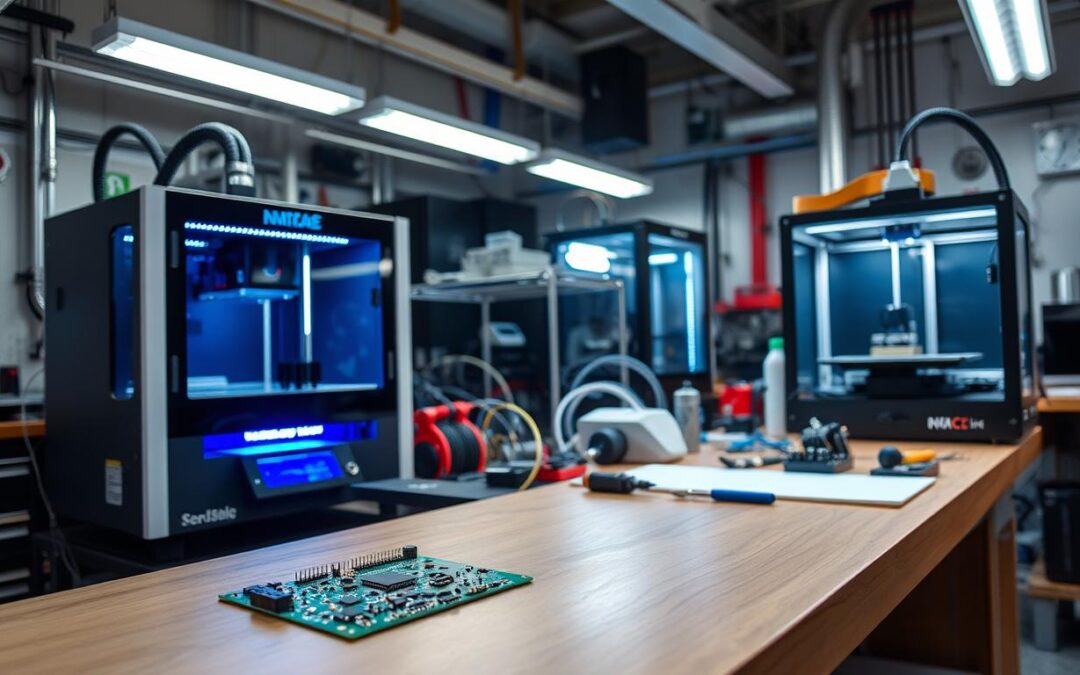
With rapid PCB prototyping, you can quickly turn your design ideas into reality. Recent data shows that a low-cost, fast service lets you try out different designs. This freedom to explore is invaluable.
A fast PCB prototype lets you test and refine your design. This way, you avoid expensive mistakes and delays. It helps you get your product to market faster, giving you an edge over competitors.
Using rapid prototyping services means you can keep improving your design. You can make changes and get your product to market quickly. This efficient process helps you reach your goals faster.
* Rapid PCB prototyping enables fast and cost-effective design iteration
* Fast PCB prototypes reduce the risk of costly errors and delays
What is a Custom PCB Prototype?
A custom PCB prototype is a test version of your electronic device’s design. It helps find and fix any issues before making many copies. This early check ensures your printed circuit board works as planned.
Definition and Overview
A custom PCB prototype is made to fit your specific needs. It’s a test board for checking how electronic circuits work before mass production starts.
Importance in Electronics
Custom PCB prototypes are very important in electronics. They let designers and engineers check their designs, make changes, and ensure the final product is up to standard.
Applications Across Industries
Custom PCB prototypes are used in many fields, like consumer electronics, aerospace, automotive, and medical devices. Each field has its own needs, and these prototypes meet them.
Let’s look at how important custom PCB prototypes are in product development. A good prototype can save a lot of time and money when launching a product.
| Industry | Requirements | Benefits of Custom PCB Prototype |
|---|---|---|
| Consumer Electronics | High volume, compact design | Reduced production costs, faster time-to-market |
| Aerospace | High reliability, durability | Enhanced product reliability, compliance with stringent standards |
| Automotive | Temperature resistance, vibration tolerance | Improved product durability, reduced warranty claims |
Understanding what a custom PCB prototype is and its role in different industries shows its value. Whether for consumer electronics or aerospace, these prototypes are key.
The Benefits of Rapid Prototyping
Rapid PCB prototyping speeds up your product development. It has many benefits. Customers love the quick and high-quality results.
Speed to Market
One big plus is getting your product to market fast. A bespoke PCB prototype service cuts down development time. Being first to market can be a big advantage.
- Reduced development time
- Faster iteration and testing
- Quicker market entry
Cost-Effectiveness
Rapid prototyping is also cost-effective. A custom-made PCB prototype lets you test designs without big production costs. This saves money by fixing issues early.
Design Flexibility
Rapid PCB prototyping offers design flexibility. You can make changes easily during development. This lets you try out different designs without big costs or time.
- Easier design modifications
- Ability to test multiple configurations
- Enhanced innovation through experimentation
Using rapid prototyping improves your product development. It makes the process more efficient, cost-effective, and flexible.
Key Features of a Successful PCB Prototype
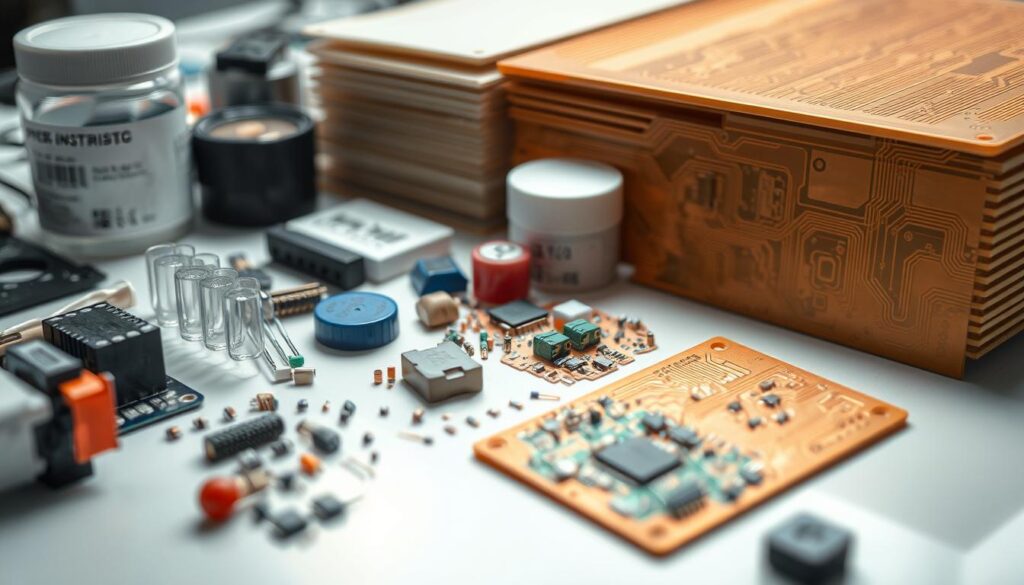
Creating a custom PCB prototype requires careful attention to several key features. These features are essential for the prototype’s success. They affect its performance and how easy it is to make.
Material Selection
The material you choose for your PCB prototype is very important. Different materials have different strengths and weaknesses. You need to think about:
- Dielectric constant
- Thermal expansion
- Moisture absorption
- Cost
Common materials include FR4, Rogers, and polyimide. Each has its own benefits for different uses. For example, FR4 is good for many consumer electronics because it’s affordable. Rogers materials are better for high-frequency uses because they lose less signal.
Layer Count and Complexity
The number of layers and how complex your PCB prototype is matters a lot. It affects how well it works and how much it costs to make. You should think about:
- Signal integrity
- Power distribution
- Grounding
- Manufacturing constraints
More layers can make your PCB better but also more expensive and harder to make. It’s important to design it right to get the best results without too much complexity.
Size and Shape Considerations
The size and shape of your PCB prototype are very important. They affect how well it works and how easy it is to make. You should think about:
- Minimum trace width and spacing
- Drill size and placement
- Component placement
- Thermal management
Making your PCB the right size and shape can save money and improve performance. It’s also important to make sure your design can be made by the manufacturer.
By focusing on these key features, you can make a successful custom PCB prototype. It will meet your needs and be ready for production.
How to Choose a PCB Prototype Manufacturer
Finding the right PCB prototype manufacturer is important. You need someone who can make high-quality custom circuit boards quickly.
Experience and Expertise
Experience and expertise are key when choosing a PCB prototype manufacturer. Look for those with a history of making complex PCBs. They should also have ISO 9001 certification to show they follow quality standards.
- Check their portfolio for similar projects.
- Verify their expertise in your specific PCB technology.
- Ask for references from previous clients.
Customer Support and Resources
Good customer support is essential for a smooth process. Your manufacturer should offer lots of resources. This includes design help, material advice, and quick customer service.
A great manufacturer will have a team ready to help you with your PCB prototype.
Technology and Capabilities
The technology and capabilities of your manufacturer are important. They should have the latest tools for making and testing PCBs.
- Advanced manufacturing technologies, such as laser drilling and automated optical inspection.
- Capability to handle various materials and layer counts.
- Quick turnaround times for fast PCB prototype production.
By looking at these areas, you can find a reliable PCB prototype manufacturer. They will help make your project a success.
Steps in the PCB Prototyping Process
Knowing the steps in PCB prototyping is key to making a top-notch custom-made PCB prototype. The process has many stages. Each one is important to make sure your prototype is just right and works well.
Design and Simulation
The first step is design and simulation. Here, you create a detailed PCB design using CAD software. You must think about where components go, how traces are routed, and the layer order. Simulation tools help find problems before you start making the board.
Fabrication
After your design is set, it’s time for fabrication. This is when the PCB is made based on your design. The steps include printing the circuit, etching the copper, and adding solder mask and silkscreen. How well this is done affects your bespoke PCB prototype‘s performance.
Testing and Revisions
Next, your PCB prototype is tested and revised. This stage is vital to make sure it works as planned. Tests check for connections, signal quality, and overall board function. If problems are found, the design is updated, and the board is made and tested again until it’s perfect.
By following these steps, you can make the rapid PCB prototyping process smooth and effective. This leads to a successful and working PCB prototype.
Common Mistakes to Avoid in Prototyping
To make sure your custom circuit board prototype goes smoothly, know the mistakes to avoid. A successful PCB prototype needs careful planning and execution.
Overcomplicating Designs
One big mistake is making your design too complicated. This can cause more problems and delays. To avoid this, keep your design simple and focused on the essential functions. Break it down into smaller parts that are easier to manage.
Neglecting Testing
Another mistake is not testing enough. Testing is key to find and fix problems before mass production. Comprehensive testing ensures your custom PCB prototype works right. Use different tests, like functional and stress testing, to check its performance.
Skipping Documentation
Not documenting well is another mistake that can lead to issues later. Good documentation helps with troubleshooting and is key for future changes. Keep detailed records of your design, testing, and changes. This helps in debugging and sharing knowledge with your team.
By avoiding these mistakes, you can make your PCB prototyping process better, save money, and improve your product’s quality. Customer feedback often shows how important good design and testing are. It shows the value of a well-done prototyping process.
Tools and Software for PCB Design
To make a great customized PCB prototype, you need the right tools and software. The design process has many stages, from the start to testing. Having the right tools can make your PCB prototype better and faster.
CAD Software Options
Computer-Aided Design (CAD) software is key for your PCB layout. Here are some top CAD software options:
- Altium Designer: Known for its detailed features and easy-to-use interface.
- Eagle: A favorite among hobbyists and pros, with lots of libraries and features.
- KiCad: An open-source option with a strong set of features for PCB design.
When picking CAD software, think about how easy it is to use, if it works with your files, and the support it offers.
Simulation Tools
Simulation tools let you test your PCB design before making it real. This saves time and money. Some important simulation tools are:
- SPICE simulators: For checking your circuit’s electrical behavior.
- Thermal simulators: Show how heat will spread in your design.
- Signal integrity simulators: Make sure your signals are good and not messed up by the PCB design.
Using these tools can spot and fix problems early. This makes your PCB prototype more reliable and fast.
Testing Equipment
After making your PCB, you’ll need the right tools to check if it works. Key testing equipment includes:
- Multimeters: For checking voltage, current, and resistance.
- Oscilloscopes: Good for looking at signal waveforms.
- Signal generators: Let you test your PCB with different signals.
Having the right testing tools is key for checking your PCB prototyping. It makes sure your final product is as it should be.
By using the best CAD software, simulation tools, and testing equipment, you can make your PCB design better. This reduces mistakes and helps you get a great customized PCB prototype.
Understanding PCB Costs
To budget for your PCB prototyping, knowing what affects costs is key. The cost of a custom PCB prototype can change a lot. This depends on several important factors.
Factors Affecting Price
Several things can change the cost of a custom PCB prototype. These include:
- Material Selection: The material used for your PCB can greatly affect the cost. For example, FR4 is often cheaper than high-frequency materials.
- Layer Count and Complexity: PCBs with more layers or complex designs cost more. This is because they need more advanced manufacturing.
- Size and Shape: Bigger PCBs or those with special shapes cost more. This is because they use more material and might have more waste.
- Quantity: How many units you order can change the price per unit. Ordering more can often save money.
Budgeting for Prototyping
When planning your budget for a custom PCB prototype, here are some tips:
- Try to make your design simpler to use less material and fewer layers.
- Think about how many you need to order. This can help balance cost and project needs.
- Look for a manufacturer that offers good prices without sacrificing quality.
Cost Comparison with Traditional Manufacturing
It’s important to compare PCB prototyping costs with traditional manufacturing. Traditional methods might be cheaper for big orders. But, prototyping services are faster and more flexible, which is great for the development phase.
Knowing these cost factors helps you make smart choices for your bespoke PCB prototype or custom PCB prototype projects. This way, you can stay on budget and meet your design goals.
Future Trends in PCB Prototyping
The future of rapid PCB prototyping looks bright. Several trends are set to make a big difference. Technological advancements, sustainability efforts, and more customization options are leading the way.
Advancements in Technology
Technology is changing the PCB prototyping game. Expect to see:
- Faster production times
- Improved precision and accuracy
- More complex designs
Advanced materials and new manufacturing methods are being developed. They aim to meet the electronics industry’s growing needs.
Sustainability Initiatives
The PCB prototyping industry is turning green. Look forward to:
- Eco-friendly materials in production
- Less waste with better manufacturing
- PCB recycling programs
These moves are good for the planet. They also save costs and boost brand image.
Increasing Customization Options
Custom PCB prototypes are becoming more popular. Expect to see:
- Personalized designs for unique needs
- Flexible PCBs for special shapes
- Quick testing and design changes
Customization lets you create products that really meet your needs. This improves performance and user satisfaction.
Conclusion: Embrace Custom PCB Prototyping
You now see why custom PCB prototypes are key in electronics projects. They help you get products to market faster, save money, and make designs more flexible.
Key Takeaways
This article covered what makes a good PCB prototype. You learned about materials, layer counts, and sizes. You also found out how to pick a trustworthy PCB prototype maker and the steps to make one.
By avoiding common mistakes and using the right tools, you can make prototyping easier. As you work on your custom PCB prototype, think about cost and budget.
Innovate with Confidence
Now you’re ready to innovate with confidence. A printed circuit board prototype lets you test and perfect your designs. This ensures your final product is top-notch. It’s great for new products or improving old ones.
As technology grows, so do the chances for custom PCB prototyping. By embracing these changes, you can lead in your electronics projects.
FAQ
What is a custom PCB prototype?
A custom PCB prototype is a first version of a printed circuit board. It’s made to test and check an electronic design before making many copies.
What are the benefits of rapid PCB prototyping?
Rapid PCB prototyping is fast and cost-effective. It lets you test and improve your design quickly.
What factors should I consider when selecting a PCB prototype manufacturer?
Look at the manufacturer’s experience, customer support, and technology. Make sure they fit your needs.
What are the key features of a successful PCB prototype?
A good PCB prototype needs the right materials, layer count, and size. It should also be simple and easy to make.
How do I design a PCB prototype?
Use CAD software to make a schematic and layout. Then, test your design with simulation before making it.
What are the common mistakes to avoid in PCB prototyping?
Avoid making designs too complicated, skipping tests, and not documenting. These can cause delays and extra costs.
What tools and software are needed for PCB design?
You’ll need CAD software, simulation tools, and testing gear like oscilloscopes. These help validate your design.
How much does a custom PCB prototype cost?
The cost depends on materials, layer count, complexity, and size. It also depends on the manufacturer’s prices.
What are the future trends in PCB prototyping?
Expect new technologies, green initiatives, and more customization. These will change the industry.
How can I ensure the success of my custom PCB prototype?
Plan your design well, choose a trusted manufacturer, and test your prototype. This way, you’ll be ready for mass production.
What is rapid PCB prototyping?
Rapid PCB prototyping is quick. It lets you make a custom PCB to test and improve your design fast.
What is a personalized circuit board prototype?
A personalized circuit board is custom-made. It’s designed for specific needs, giving you tailored performance.
How does custom-made PCB prototyping work?
It involves designing and making a PCB for specific needs. You use CAD software, simulation tools, and manufacturing tech.