

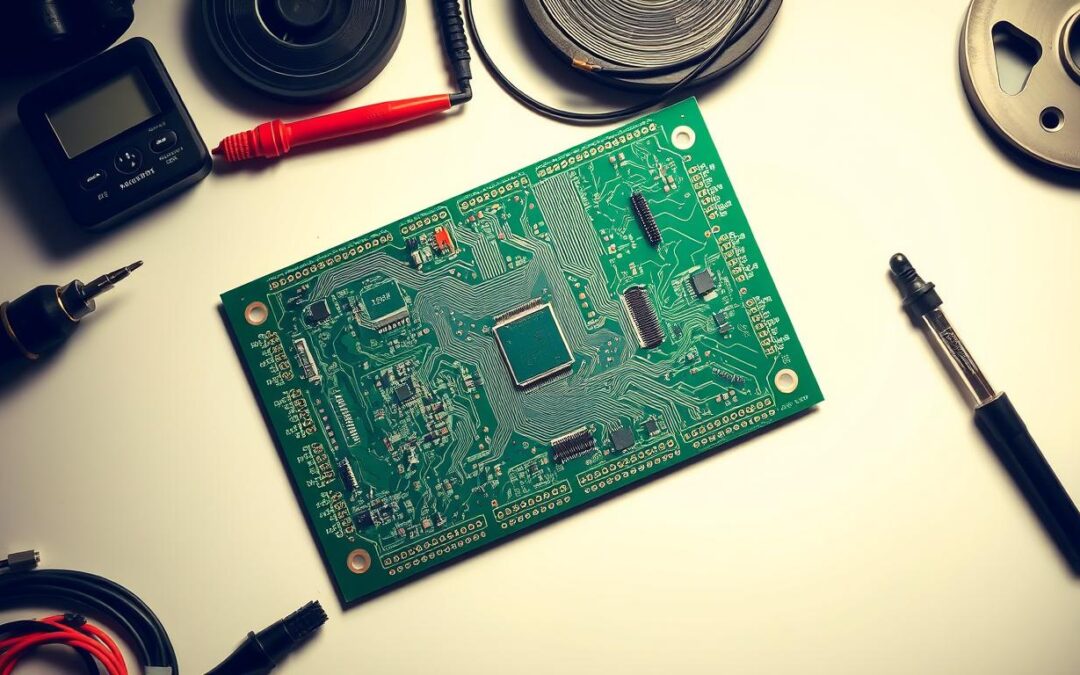
Surprising fact: a single custom board can range from about $1 to over $50 per unit depending on materials and layers.
You need clear rules to estimate pricing before you order. This short guide gives you a practical framework to model board size, layer count, materials, surface finishes, quantity, and lead time.
What you get: a quick way to see where per-unit prices fall as you move from a handful of samples to small batches and larger runs.
Design choices like trace width and hole sizes drive price up or down. Choosing FR-4 over advanced materials or standard finishes like HASL versus ENIG also matters.
If you want local help in South Africa, contact Repro Supplies in Boksburg at info@reprosupplies.co.za or +27 11 826 5364 for quotes and manufacturer support that fit your projects and needs.
Why cost clarity matters before you prototype a PCB
Estimating expenses early keeps your project on schedule and within budget. Upfront figures stop rushed decisions and avoid last-minute lead-time premiums.
Per-unit charges are highest for 1–10 pieces because of setup fees. As volume rises, unit prices fall. Typical turnaround is 10–15 business days. Rush service can be 24 hours but adds a premium.
Plan early to reduce surprises. Model pricing across board size, layer count, and materials before you order.
- You prevent over-design and surprise invoices by modelling costs before committing to production.
- Small runs carry higher per-unit prices; realistic expectations save rework.
- Lead-time choices directly affect pricing; avoid expedite fees when possible.
- Align prototype quantities with test plans to avoid wasted boards and money.
- Local (South African) quoting from Repro Supplies in South Africa shortens cycles and improves communication. Reach us at info@reprosupplies.co.za or +27 11 826 5364.
PCB prototype fabrication cost: what really drives your price
Small changes in board area or layer count often create the largest shifts in final pricing. Below are the key factors that most directly affect what you pay for a pcb run.
Board size and layer count
Board area and extra layers multiply material use and processing time. A four-layer or six-layer stack adds drilling, lamination, and registration steps. That raises per-unit pricing fast.
Materials and finishes
FR-4 is the cost-effective default. Rogers, ceramic, or aluminium laminates increase price and delivery time. For surface finishes, HASL lowers spend; ENIG raises price but gives better flatness and solderability.
Order volume and design complexity
Low volumes carry setup fees that push up per unit rates. Fine traces, small vias, and tight tolerances increase yield risk and processing time. Relaxing non-critical specs often reduces costs.
Lead time and scheduling
Expedited slots disrupt workflow and add premiums. Standard lead times keep pricing steady.
| Driver | Impact | Typical change | Tip |
|---|---|---|---|
| Board area / layers | High | +20–200% | Reduce area or layers if possible |
| Materials | Medium–High | +10–300% | Choose FR-4 for standard use |
| Design complexity | Medium | +10–80% | Use standard trace widths and via sizes |
| Lead time / finish | Low–Medium | +5–50% | Avoid rush unless necessary |
Need advice tailored to South African projects? Repro Supplies can advise on stackups, materials, and finishes. Email info@reprosupplies.co.za or call +27 11 826 5364.
Typical prototype pricing ranges and service levels
Different production paths produce very different budgets for the same board.
Basic bare-board fabrication is the lowest-cost route when you only need layout and fit validation.
Basic bare-board fabrication: when you only need boards
Simple single-layer boards often fall between $1 and $5 per unit for small runs.
Double-layer boards range roughly $1–$10 per unit. Four-layer small-quantity runs sit around $10–$20 each.
Rapid PCB prototyping: paying for speed
Quick-turn services shorten calendar time to 24–72 hours. Expect higher pricing for the faster slot.
Use rapid service only when schedule pressure demands it. Rush work raises the per‑unit price and can push lead times for other jobs.
PCB prototypes with assembly: consolidating fabrication and build
Adding assembly shifts the quote to component sourcing, placements, and setup fees.
Assembly jobs can range from a few hundred dollars to $2,000+ depending on volume and complexity.
- Bare-board is cheapest for layout checks.
- Quick-turn buys time but adds a clear premium.
- Assembly saves coordination time and brings combined pricing.
- Per‑unit pricing drops as quantity increases within the same service level.
- Complex stackups, microvias, or controlled impedance raise base charges.
- Kitting components yourself can reduce the assembly price if sourcing is reliable.
If you need local suppliers or manufacturers in South Africa, Repro Supplies can supply bare boards or coordinate assembly. Email info@reprosupplies.co.za or call +27 11 826 5364.
South Africa snapshot: what influences PCB costs locally
Local factors often swing final pricing more than small layout tweaks.
Import freight, exchange rates, and customs add uncertainty to your quote. Exotic laminates and rare parts often arrive from overseas. That raises lead time and the final price.
Standard FR‑4 and common finishes like HASL or ENIG are widely available in South Africa. Using these materials shortens turnaround and lowers risk.

Plan around standard 10–15 business days. That avoids rush fees and gives room for customs checks.
- Exchange rates and freight can shift your final price more than small design tweaks.
- Standard FR‑4 and HASL/ENIG are easier and faster to source locally.
- Speciality materials may need offshore sourcing and longer lead times.
- Consolidate orders to cut per‑shipment overhead and customs delays.
- Early DFM checks with a local partner prevent re-spins and wasted schedules.
Repro Supplies in Boksburg helps balance local production with global sourcing. Email info@reprosupplies.co.za or call +27 11 826 5364 for a local quote that matches your projects and needs.
Prototype vs mass production: how unit price drops as volumes rise
Scaling from a handful of boards to thousands shifts how each board is priced and produced.
Setup and tooling dominate small runs. Those fixed fees hit hard when you only make a few boards. Spreading the same setup over 50–100 pieces often cuts the per unit price by 30–50%.
At 1,000+ units, line efficiency and bulk buying drop prices further. Process steps become repeatable. Yield improves and labour per board falls.
Setup and tooling dilution across batches
Fixed setup spreads across more units as you scale. Panelization raises throughput and lowers material waste. Documented work instructions and fixtures trim build time per unit.
Process optimization from prototype to production
Use prototype runs to find yield issues. Move from simple functional checks to in‑circuit and boundary-scan tests in production.
- DFM refinements remove special steps that add price.
- Supplier agreements stabilise materials and finishes.
- Expect price breaks at panel-fill and labour-efficiency thresholds.
Repro Supplies can quote prototype and ramp-to-production options in South Africa. Email info@reprosupplies.co.za or call +27 11 826 5364.
Design for cost: practical DFM tactics that lower PCB costs
A few practical DFM rules cut complexity and keep unit pricing predictable. Apply them early in your layout and you reduce rework and overtime charges.
Standardize stackups, materials, and finishes
Choose common FR‑4 stackups and standard copper weights. That avoids premiums and short lead times.
Stick to common finishes like HASL or ENIG to simplify supply and maintain reliable surface quality.
Right-size tolerances and minimize special processes
Keep trace and space within standard shop capabilities. Relax drill tolerances where performance allows.
Avoid blind or buried vias unless the design truly needs them. Special processes add steps and raise the risk of rejects.
Panelization strategies for small boards
Panelize multiple small designs to maximise material use. Group identical outlines to improve throughput.
Target the smallest feasible board outline while preserving test points and assembly access.
Reduce layer count and board area without sacrificing performance
Use the lowest acceptable substrates and remove unnecessary layers. Consolidate components to shrink the board.
Work with your manufacturer on routing density and proven stackups to keep complexity low.
| Tactic | Impact | When to use | Quick action |
|---|---|---|---|
| Standard FR‑4 & copper | Medium | Most designs | Specify common stackup early |
| Relax tolerances | High | Non-critical signals | Increase drill and routing clearances |
| Panelization | High | Many small boards | Combine designs on one panel |
| Avoid blind/buried vias | Medium | When not required | Use through vias or redesign |
Repro Supplies in Boksburg offers DFM feedback for South African builds. Email info@reprosupplies.co.za or call +27 11 826 5364 to align stackups and drill charts with your manufacturing needs.
Materials and finishes: balancing performance, availability, and price
Material selection sets the baseline for board reliability and delivery time.
Use FR‑4 for general-purpose digital and mixed-signal designs. It gives stable electrical behaviour and broad local availability in South Africa. FR‑4 keeps pricing predictable and supports standard assembly flows.
When FR‑4 is enough—and when it isn’t
Choose high-performance laminates only when signal integrity, RF, or thermal demands require them. Materials like Rogers provide tighter dielectric stability but add lead time and higher pricing.
HASL, ENIG, and other finishes: cost vs reliability
HASL reduces spend and suits many builds. ENIG delivers a flatter, more reliable surface for fine-pitch parts and lead-free assembly. Special colours or coatings can increase turnaround and add expense.
- Practical rule: keep solder mask and silkscreen standard to limit variability.
- Confirm local availability with manufacturers to avoid import delays.
- Document stackup and dielectric targets early to prevent rework.
| Choice | Best for | Impact on pricing | Action |
|---|---|---|---|
| FR‑4 | General digital, mixed-signal | Low–Medium | Specify common stackup |
| High‑performance laminates | RF, high-speed, thermal | High | Confirm availability early |
| HASL | Standard assembly | Low | Use for non-fine-pitch pads |
| ENIG | Fine-pitch, lead-free | Medium–High | Align with soldering method |
Repro Supplies advises on FR‑4 vs high-performance laminates and finish selection for South African builds. Email info@reprosupplies.co.za or call +27 11 826 5364.
Lead time, yield, and quality: the hidden costs in your schedule
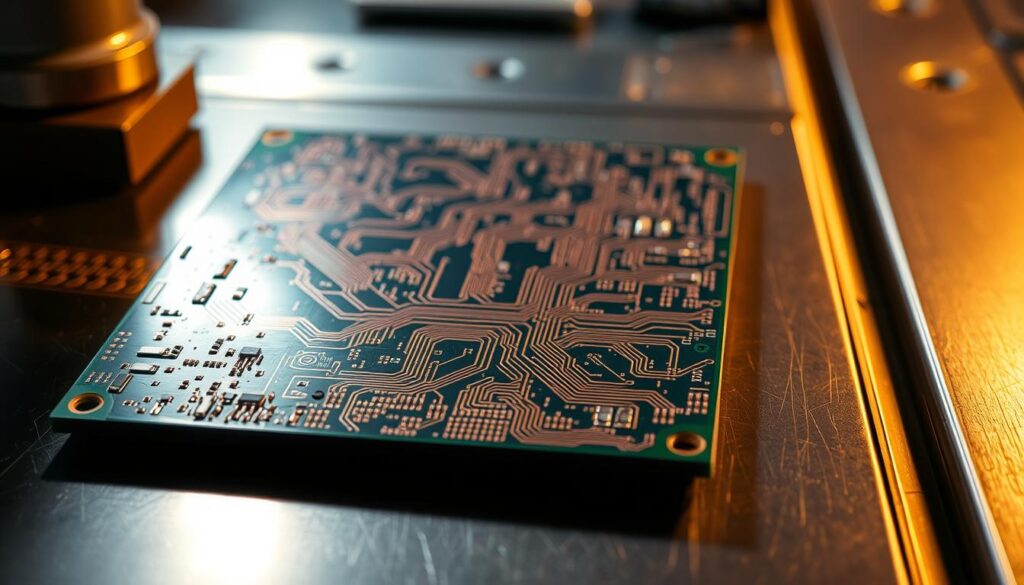
Lead schedules and test windows are where hidden expenses quietly appear. Standard runs typically take 10–15 business days in South Africa. Rush slots can drop that to 24 hours but add premiums and risks.
Choosing standard vs expedited turnaround
Standard turnaround avoids expedite fees. It also gives you room for assembly and validation. That reduces surprises and late rework.
Expedited service shortens calendar time. It can tighten process windows and raise the chance of defects. Higher price for speed often hides lower yields.
How quality standards impact rework and final cost
Adopt clear acceptance criteria tied to IPC-6012 and IPC-A-600. Those standards cut disputes and unplanned repairs.
- Standard turnaround avoids expedite fees and eases scheduling for test and assembly.
- Rush builds carry higher price and can constrain process margins.
- Clear acceptance criteria reduce disputes and unplanned rework costs.
- Better yields lower the true cost per unit even if the quote is slightly higher.
- Plan buffer time for validation to avoid last-minute expedite charges.
- Use test coupons and AOI/ICT to catch defects early.
- Align documentation with IPC standards to support consistent output.
- Balance speed with quality to protect total project economics.
Repro Supplies helps plan realistic lead times and quality targets for South African builds. Email info@reprosupplies.co.za or call +27 11 826 5364 for guidance on scheduling, yield improvements, and the manufacturing process that protects your final cost.
Assembly impact on the final cost of your prototype
How you source parts and arrange assembly drives a large portion of the final invoice. Your BOM, kitting choices, and whether you use SMT or THT change labour and material flows.
Your bill of materials directs price through package types, part count, and lead times. Hard-to-find components raise lead time and add margin. Supplying parts as a kit can lower vendor charges if reels and counts are correct.
Mark alternates and DNPs clearly. That reduces confusion on the production floor and limits rework.
BOM choices, sourcing, and kitting considerations
- Your BOM drives the quote: SMD reels, odd packages, and single-piece counts matter.
- Kitting trims expenses when you supply full reels, correct labels, and alternates.
- Turnkey procurement adds convenience but increases the overall price per unit.
SMT vs THT: placement complexity and labor
SMT placement is fast and usually cheaper per part. Automated pick-and-place and reflow reduce labour for small to medium runs.
THT requires more hands-on labour and often wave or selective solder. Use THT for connectors, heavy components, or items needing mechanical strength.
| Process | Typical impact | When to choose |
|---|---|---|
| SMT | Lower labour per unit; faster | Fine pitch, many small parts |
| THT | Higher labour; specialised solder | Large connectors, heavy components |
| Turnkey | Higher price; saves procurement time | No in-house sourcing |
Practical tip: Include test points and a clear power-up guide to speed debug and reduce rework costs.
Repro Supplies can coordinate assembly in South Africa and accept customer-supplied kits. Email info@reprosupplies.co.za or call +27 11 826 5364 for assembly planning and manufacturer coordination.
How to calculate your PCB prototype cost step by step
Start by locking the board dimensions and layer count; these set the base line for every later choice.
Define the stackup and key requirements. Specify copper weights and any impedance targets. That prevents surprises during quoting.
Materials and finishes
Select FR‑4 for general use or specify advanced laminates only if needed. Choose a solder mask and silkscreen that match your assembly plan. Pick HASL or ENIG based on part pitch and reliability.
Quantity and lead time
Model pricing at 5, 10, 50, and 100 pieces to find where per unit pricing drops. Compare standard and rush lead times to weigh schedule versus pricing.
Assembly variables
Include BOM detail, package mix, DNPs, test method, and whether you will kit parts or request turnkey sourcing. Note special processes like microvias or controlled impedance early.
- Start with dimensions and layers.
- Specify a realistic stackup tied to thermal or impedance needs.
- Model multiple quantities to spot inflection points.
- Request a detailed quote breakdown to tune each lever.
For a precise quote in South Africa, send files to Repro Supplies: info@reprosupplies.co.za or call +27 11 826 5364.
Smart ordering strategies that protect your budget
Smart ordering reduces repeated setup fees and keeps quotes predictable. Use batching and clear comparison runs to see where pricing and unit breaks matter.
Batching iterations and consolidating orders
Group design spins into a single order to cut repeated setup and shipping charges. Panelize small boards to improve material yield and reduce waste.
Practical steps:
- Batch design revisions to reduce per‑run setup.
- Panelize identical outlines to maximise material use.
- Supply reels or kit parts to speed assembly and lower fees.
Quote multiple configurations to find price inflection points
Request quotes for alternate stackups, finishes, and quantities. Compare local and offshore manufacturers for special materials or services.
Ask Repro Supplies to bundle orders and provide alternate quotes for South African projects. Email info@reprosupplies.co.za or call +27 11 826 5364.
| Strategy | Effect on pricing | When to use | Action |
|---|---|---|---|
| Batching spins | Lower unit | Multiple revisions | Combine releases |
| Panelization | Material saving | Small boards | Group on one panel |
| Alternate quotes | Expose price breaks | Uncertain specs | Compare 3+ vendors |
| Local vs offshore | Balance lead time | Special materials | Weigh quality and support |
Choosing a PCB manufacturer in South Africa
A clear, itemised quote helps you compare manufacturers and lock delivery expectations. Transparency reduces hidden fees and speeds decision making.
Transparency, certifications, and support standards
Look for a provider that shows a breakdown of tooling, materials, finishes, and lead-time charges. Ask for alignment with IPC-6012 and IPC-A-600 workmanship standards.
Fast CAM checks and prompt DFM feedback prevent re-spins. Dedicated local support shortens review loops and keeps schedules tight.
What to expect from prototypes vs production partners
Prototype partners prioritise speed and flexibility. Expect rapid file checks and quick turn communication.
Production partners focus on repeatability. They offer test strategy, supply forecasting, and stronger logistics support.
- Clear cost breakdowns, not lump sums.
- DFM feedback included to avoid rework.
- Confirm lead-time commitments and escalation paths.
- Evaluate test coverage and supply stability for production runs.
- Check local material availability to protect schedules.
| Stage | Focus | What you should check |
|---|---|---|
| Early runs | Speed, flexibility | CAM turn, DFM, fast quotes |
| Ramp to production | Repeatability, yield | Test plan, supplier lead times |
| Commercial runs | Logistics, forecast | Material contracts, escalation paths |
Repro Supplies is your local partner in Boksburg for pcb prototyping and production support. For transparent quoting and local assistance, email info@reprosupplies.co.za or call +27 11 826 5364.
Get a precise quote from Repro Supplies in Boksburg
A clear, itemised brief gets you an accurate quote and a realistic schedule.
Email info@reprosupplies.co.za or call +27 11 826 5364 with your files and core details. Include board dimensions, layer count, stackup intent, finish, quantity, and your target lead time.
Also send assembly notes: BOM, DNPs, test requirements, and whether you want kitted or turnkey sourcing. Standard South African lead times are typically 10–15 business days; expedited options are available at a premium.
To speed quoting and avoid hidden charges, state two or three quantity levels so we can show unit and per‑unit price breaks. Ask for DFM feedback to remove avoidable cost drivers before manufacturing.
Repro Supplies — PCB Prototyping Services in South Africa. We support local projects and reliable delivery across the country.
FAQ
What factors most influence the price of a PCB prototype?
Board size, layer count, and material selection lead the list. Design complexity (dense traces, many vias, fine tolerances), surface finish, and whether you add assembly all increase the final price. Short lead times and expedited service also add premiums.
How does board size and number of layers affect per‑unit pricing?
Larger boards use more laminate and reduce panel yield, raising per‑unit pricing. Additional layers mean more lamination cycles and tooling, so costs jump with each extra layer. Small area reductions or fewer layers are the easiest levers to lower price.
When should I choose standard FR‑4 versus a higher‑performance laminate?
Use FR‑4 for most digital and low‑frequency designs; it is widely available and cost‑effective. Select high‑performance laminates for high speed, high temperature, or controlled impedance needs — but expect higher material and processing charges.
How does order volume change the unit price?
Small runs carry setup and testing overhead that’s spread over fewer units, so per‑unit price is high. As quantity grows, setup and tooling costs dilute and unit price falls. Transitioning from prototype to production typically yields significant per‑unit savings.
What design choices increase manufacturing difficulty and price?
Fine pitch components, blind/buried vias, very thin traces, tight pad tolerances, and unusual board shapes increase processing time and risk. These call for advanced tooling or extra inspection steps and push up costs.
Which surface finishes are most common and how do they affect pricing?
HASL (lead‑free) is cheapest for general use. ENIG costs more but gives better solderability and flatness for BGAs. Other coatings like immersion silver or OSP sit between those on price and performance. Choose finishes based on assembly needs and budget.
How much extra will expedited lead times add to my order?
Expedited turnaround often means overtime, priority scheduling, and fast shipping. Expect a premium that ranges widely by manufacturer — commonly 20–100% extra depending on how fast you need the boards.
What are typical pricing tiers for bare boards, rapid service, and assembled prototypes?
Bare‑board basic runs are cheapest per unit but include only fabrication. Rapid services charge more for speed. Adding assembly (SMT/THT), parts sourcing, and testing increases the total substantially. Consolidated services save time but raise the quoted price compared with bare boards alone.
What local factors in South Africa affect pricing?
Import duties on components and laminates, local supplier availability, and exchange rates influence prices. Local lead times and the presence of certified manufacturers also matter. Choosing a nearby partner can reduce shipping and turnaround costs.
How does the price per unit change when moving from prototype to mass production?
Setup and tooling are spread across many more units in production, so tooling dilution and process optimization lower per‑unit pricing. You may also qualify for better material pricing and manufacturing yields at scale.
What DFM tactics will lower your board expenses?
Standardize stackups and materials, avoid special finishes where possible, loosen tolerances to standard values, panelize small boards, and minimize layer count and board area. These reduce process complexity and increase panel yield.
Which finishes balance reliability and price for most projects?
For many projects, lead‑free HASL is the most economical. ENIG costs more but improves reliability for fine‑pitch and BGA parts. Choose based on component type, soldering method, and expected life of the product.
How do yield and quality affect the hidden costs of a schedule?
Low yield means rework, scrap, and longer timelines. Stricter quality standards raise inspection and testing steps but reduce downstream rework. Plan realistic lead times and quality levels to avoid surprise expenses.
How does assembly choice impact the final price of a prototype?
BOM complexity, part sourcing difficulty, and whether you require SMT, THT, or mixed assembly change labor and setup needs. Kitting, testing, and handling DNP (do not populate) items add to the final quote. Simple BOMs and common parts lower costs.
What steps should I follow to calculate a reliable per‑unit price?
Define board dimensions, layer count, and stackup. Pick materials, finish, solder mask, and silkscreen. Set quantity and lead time. Add assembly details: BOM, placement counts, and test needs. Include shipping, customs, and test costs for a complete total.
What ordering strategies reduce expense across prototyping rounds?
Batch iterations together, panelize multiple boards, and consolidate orders to spread setup costs. Request quotes for a few configurations to see where price inflection points occur. Schedule realistic lead times to avoid rush premiums.
How should I choose a manufacturer in South Africa?
Look for transparent quoting, relevant certifications (ISO, IPC where applicable), clear lead‑time policies, and local support. Compare sample lead times, quality records, and whether they handle both prototypes and production.
How can I get a precise quote from Repro Supplies in Boksburg?
Provide detailed files (Gerbers), board size, layers, material and finish choices, quantity, and desired lead time. Include assembly needs and a BOM if required. Repro Supplies will then supply an itemized quote covering fabrication, assembly, and delivery.